

It was a drizzly day in Edinburgh atop a fog-wrapped Carlton Hill that I found my execution ground. The thought just popped into my head.
Alpha will die here.
Alpha was the villain from my dystopian novel, System, that at this point in my life was still largely in my head. I was lost in my grisly imaginings when I heard some concerned murmurings from behind me. Turning, I saw two tourists wrapped in neon plastic ponchos, suspicion in their eyes, I realised then I had said it out loud. I considered telling them I was a novelist (or trying to be), and not a would-be murderer, but they hurried away before I could explain myself.
I told this story at a panel on the future of creativity where I was asked to describe a moment of inspiration. I had hoped it would make the audience laugh, but most stared mutely. An elderly lady in the front row tartly asked for a ‘better’ example from my scientific career. I suppose she had a point, I was there as a scientist. She was likely hoping for a eureka moment, but between you and me, in climate science, those are few and far between. Discoveries in my old field tend to just be depressing.
A year later, newly shorn of that scientific identity and unsure of my next, I stood once more before the National monument. This time in bright sunlight. A series of Corinthian pillars, built to commemorate the dead Scotsman of the Napoleonic wars, It’s a strange construction. Perched high above the city, it looms over Princes street, even more visible than the ancient castle that squats at Edinburgh’s centre.
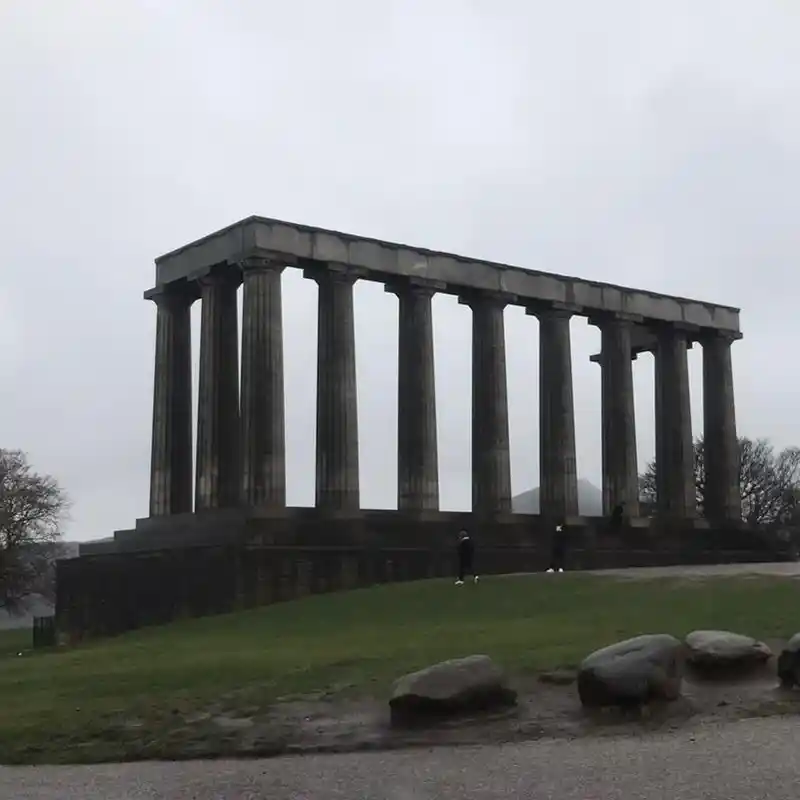 The Napoleonic memorial, Carlton Hill
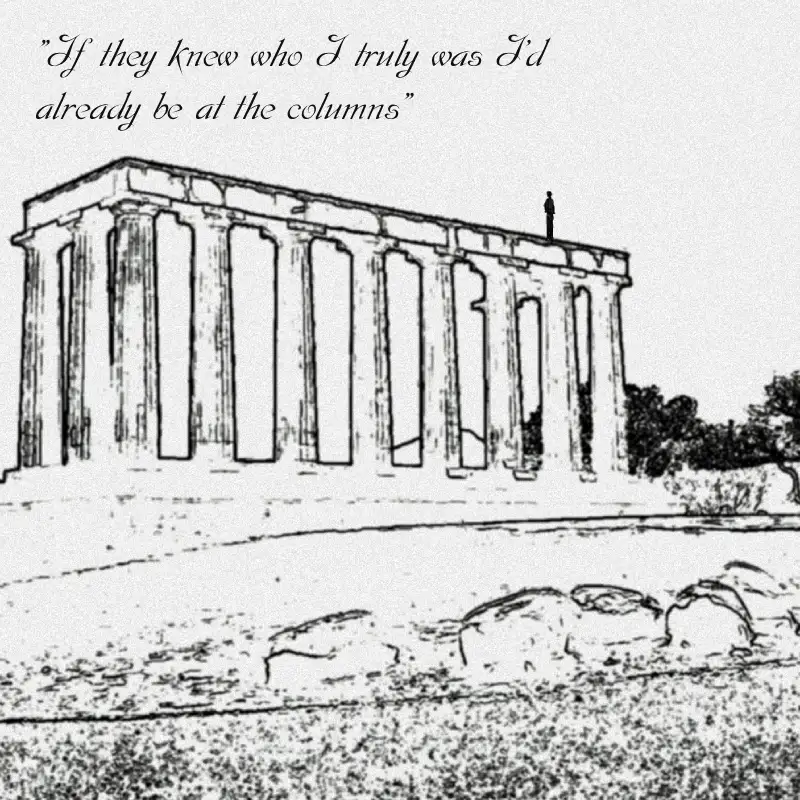 The Columns Execution Ground, Dissenters Hill
 MacKenzie Mausoleum, Greyfriars Churchyard
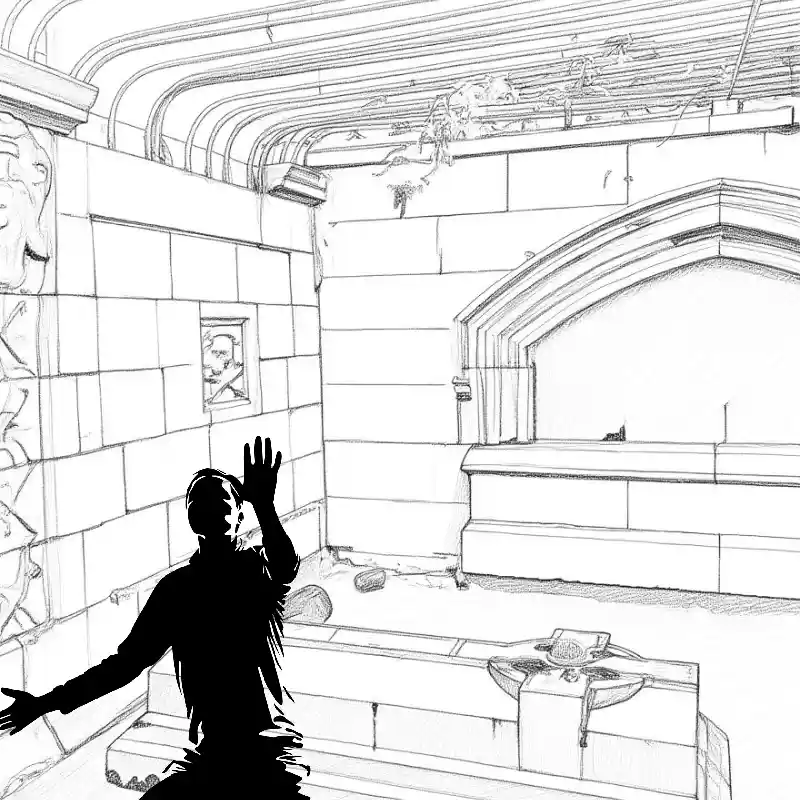 Hamish’s Cell, Olc fields
I had been in Edinburgh for three days, scouting locations for my debut novel System. Over four days I found the compliance office in the marble floored museum of Scotland, the Luthian traitors cells in the historic Greyfriars cemetery and the Union message board on a graffitied door in Castle Wynd. Edinburgh is my favourite place in the world, the site of my alma mate, the birthplace of my first love (it didn’t turn out well) and the home of the best arts festival in the world. So why, in my debut novel, do I transform it into a dystopian hellscape controlled by a white supremacist cult? I’m sure my therapist has some thoughts but the reason is both writerly and practical. Here are three things to consider when setting your novel.
How well do you know it?
This seems an obvious question but you would be surprised how many authors never visit the places they write about. I lived in Edinburgh for many years and was also (briefly) a tour guide. I know the cramped Wynds and closes that tunnel through the city, the smell of the alleys and the feel of the slippery granite cobbles under clumsy heeled feet (it was snowing and I’m not very coordinated). When Gyllyvasse dodges patrols to reach the night market I can visualise her route to the vaults, which are also a real place.
So, pick a place you know, or can at least visit. Spend a few days wandering around, muttering to yourself and taking odd pictures. It’s okay to look weird, you’re a writer.
What if I’m writing about the future?
Just because your writing about a future doesn’t mean you can’t include details about the novels ‘past’. To gauge how much ‘past’ detail to include, a good exercise is too research what was happening in the past at around the same time interval you want to project into the future. I set System roughly five-hundred years in the future. In 1526 (500-years into the past) the murderous Henry VIII was king and just about to dump his loyal wife for Anne Boleyn. The world was very different but some things were the same. Edinburgh was called Edinburgh for example, although it was the capital of the country Scotland.
That said, human progress (or collapse) is rarely linear and as long as you create some plausible triggers (even if its in your head and never reaches the page) the world will feel real.
Never let research get in the way of a good story
The best writing advice I ever got was ‘we make this s**t up’. Its easy to fall down a research rabbit hole where you become so engrossed in being ‘accurate’ you forget it’s fictional. This is your book, your story, your world.
Make it up.
Leave a Reply